10 Best Investment Casting Process Techniques for Precision Manufacturing?
In the world of precision manufacturing, the Investment Casting Process stands out for its ability to create complex geometries. As noted by industry expert Dr. Emily Chen, "Investment casting is not just a process; it’s an art form that merges precision with creativity." This statement encapsulates the essence of why this technique is so revered.
The Investment Casting Process involves melting metal and pouring it into a mold. This allows for remarkable detail and surface finish. However, achieving perfection can be a challenge. Factors like mold quality, temperature control, and material choice all play critical roles. Many professionals often grapple with the trade-offs between cost and quality.
In practice, the best techniques for investment casting require both experience and innovation. There is no one-size-fits-all solution. Continuous learning and adaptation are vital. Each project may bring unforeseen complexities, prompting manufacturers to reflect on their methods. As the industry grows, keeping pace with advancements in this process will be essential for success.
Understanding Investment Casting: Definition and Overview
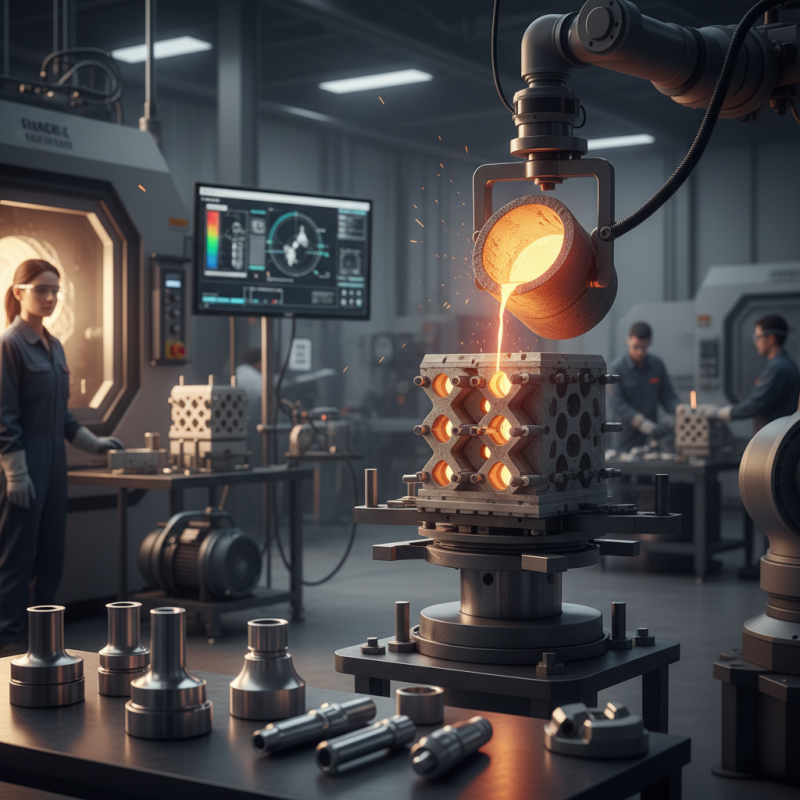
Investment casting is a highly precise manufacturing process. It allows for the creation of intricate shapes and fine details. This technique begins with a wax pattern, which is coated in a ceramic shell. Once the shell hardens, the wax is melted away, leaving a cavity for molten metal. This process can produce complex geometries that traditional methods struggle to achieve.
The investment casting process is beneficial for many industries. Aerospace and automotive sectors often rely on its capabilities. However, it does have limitations. For example, the initial tooling costs can be high. This may not be feasible for small production runs. Additionally, achieving a perfect finish requires skilled craftsmanship. While investment casting provides accuracy, imperfections can still occur. It's essential to be mindful of these factors when considering this process.
Understanding the intricacies of investment casting is vital for manufacturers. Each step must be meticulously executed to ensure quality. Knowledge of materials and techniques is crucial for successful outcomes. As with any manufacturing method, continual improvement is key. Evaluating past projects can unveil areas needing adjustment. As experts will attest, precision comes from experience and learning from mistakes.
Key Advantages of Using Investment Casting in Precision Manufacturing
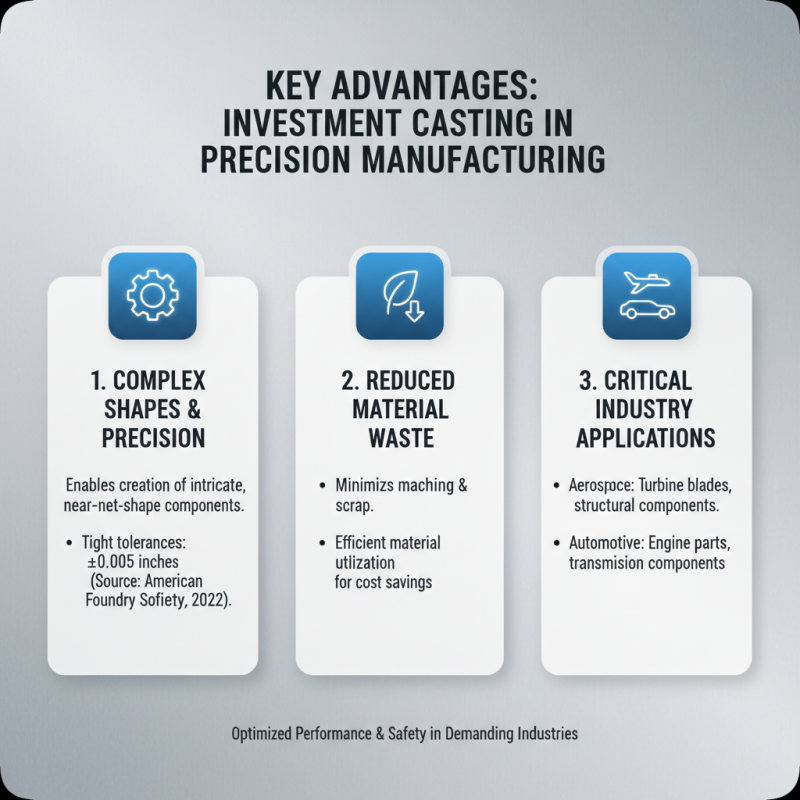
Investment casting stands out for its ability to create complex shapes with high precision. In industries like aerospace and automotive, this technique significantly reduces waste material. According to a 2022 report by the American Foundry Society, investment casting can achieve tolerances as tight as ±0.005 inches. This precision is crucial for components where performance and safety are paramount.
Another key advantage is the material versatility offered by investment casting. It allows for a wide range of metals, including specialized alloys. These materials can withstand extreme conditions, making them ideal for high-stress applications. A survey conducted by the Manufacturing Industry Association found that 85% of manufacturers prefer investment casting for its ability to produce intricate designs. This capability streamlines production and often leads to shorter lead times.
However, the process isn't without challenges. Tooling costs can be high, which may deter smaller operations. Additionally, intricate designs sometimes lead to hidden defects that affect end-product quality. Continuous improvement and inspection processes are essential to address these concerns. Balancing cost and precision remains a critical consideration for manufacturers utilizing investment casting in their production processes.
Step-by-Step Investment Casting Process: From Design to Production
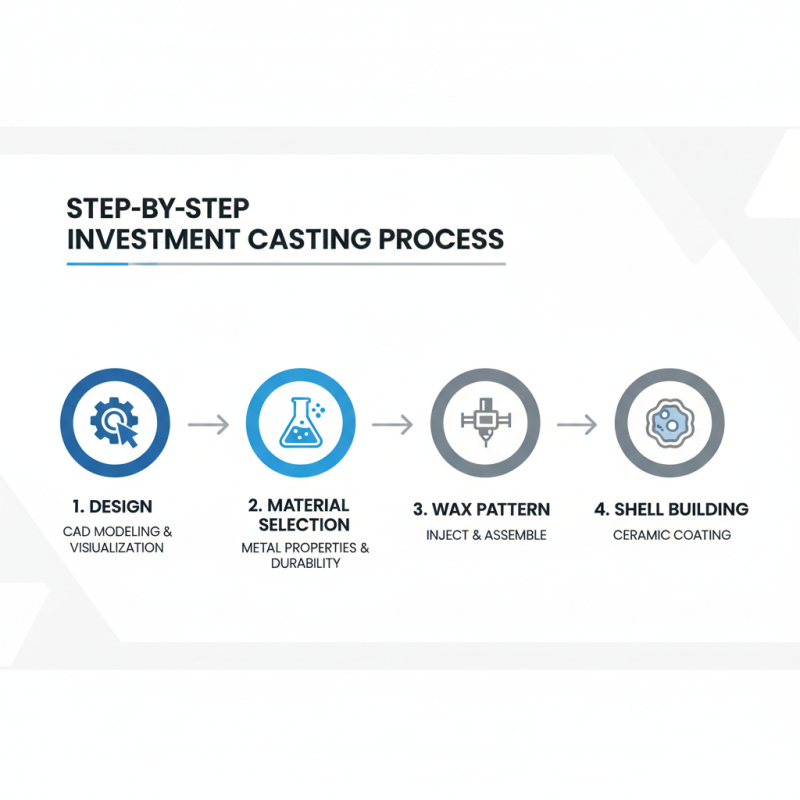
The investment casting process starts with a detailed design. Engineers create a model, often using CAD software. This model helps visualize the final product's specifications and dimensions. Choosing the right material is crucial at this stage. Different metals offer varying properties, affecting strength and durability.
Next, the pattern is made, typically from wax or similar materials. Patterns are coated with a ceramic shell. This shell hardens and forms a mold. When the shell is ready, the pattern is heated to remove the wax. This step requires precision; any mistake can lead to defects in the final casting. After mold preparation, molten metal is poured into the shell.
Cooling takes time. This phase requires careful monitoring to avoid cracking. Once cooled, the shell is removed, revealing the casting. Post-processing involves cleaning and finishing the piece. Each stage in this process can present challenges, from design errors to casting flaws. Continuous evaluation is essential to improve efficiency and quality. Regular feedback helps refine techniques and address issues. Such reflections are vital for mastery in investment casting.
Innovative Techniques in Investment Casting for Enhanced Accuracy
Investment casting is renowned for its precision, but innovative techniques are pushing the boundaries of accuracy even further. Advanced computer simulations are one such method. These simulations allow for optimized designs and processes, reducing material waste. Modeling helps predict how molten metal will flow, enhancing the overall quality of the final product. However, reliance on technology can sometimes lead to overlooking practical experience, which remains invaluable.
Another noteworthy technique is the use of new refractory materials. These materials withstand extreme temperatures and pressures, improving the durability of the casting process. They contribute to a smoother surface finish, requiring less post-processing work. Yet, experimenting with new materials can bring unexpected challenges. It’s crucial to conduct thorough testing before full-scale implementation.
Tips: Always stay updated with the latest materials and techniques. Collaborate with industry experts to gain insights. Finally, embrace trial and error; learning from failures can significantly advance your methods.
Quality Control Methods in Investment Casting: Ensuring Precision Output
Quality control is a critical aspect of the investment casting process. Precision manufacturing relies on consistently high standards. According to a report by the American Foundry Society, defects can occur in up to 30% of castings without proper oversight. Employing stringent quality control methods reduces this risk significantly.
Visual inspections are common in the initial stages. Trained professionals examine patterns and molds for flaws. Additionally, non-destructive testing methods like radiography ensure that internal structures are sound. These techniques help identify issues early in production. A study revealed that 65% of defects could be detected with timely inspections.
Companies also use statistical process control (SPC) to monitor key parameters. By analyzing data in real-time, variations are caught before they lead to bigger problems. However, reliance on technology alone has its drawbacks. Human oversight remains essential, as certain defects are not easily quantifiable. Balancing technology and expertise is vital for ensuring precision output in investment casting.