2026 How to Choose the Best Steel Investment Casting Method?
Choosing the right method for Steel Investment Casting can be challenging. It requires careful evaluation of various factors. Each casting technique offers different benefits and limitations.
Understanding the characteristics of Steel Investment Casting is crucial. This process can produce complex shapes with high precision. However, it may not always be the most cost-effective option. Factors like material type, production volume, and part complexity play significant roles.
Quality and performance are paramount when selecting a method. Sometimes, what seems ideal on paper may not translate to practical success. Testing different approaches could reveal unexpected outcomes. A thorough analysis can guide better decision-making in Steel Investment Casting.
Understanding Investment Casting: Key Concepts and Applications
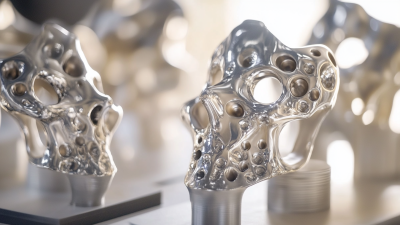
Investment casting is a versatile process for producing complex metal parts. It involves creating a wax pattern,
covering it with a ceramic shell, and then melting the wax away. This method allows for intricate design features that other methods struggle to achieve.
Many industries benefit from this technique, especially aerospace and automotive sectors.
One crucial aspect of investment casting is material selection. The choice of steel can significantly impact the final product's performance.
Different alloys have unique properties, influencing strength, hardness,
and resistance to corrosion. Engineers often face challenges in balancing these properties to meet specific demands.
Sometimes, they may overlook future performance criteria. Testing and validation can be costly but necessary for achieving optimal results.
Another important consideration is the design of the pattern. Complexity can lead to higher costs. Designers need to simplify where possible but retain functionality.
Each design decision can have lasting implications. Mistakes in the early stages can create costly headaches later on. Reflection on the design process is vital for success.
Striking a balance between creativity and practicality is essential in effective investment casting.
Evaluating Different Steel Alloys for Investment Casting Purposes
When evaluating different steel alloys for investment casting, it’s crucial to consider their properties and applications. Alloys like 316 stainless steel and 4140 alloy steel are popular due to their durability and resistance to corrosion. According to recent industry reports, the global investment casting market is expected to reach over $20 billion by 2026, highlighting the increasing demand for these materials.
316 stainless steel offers excellent corrosion resistance and high strength, making it ideal for harsh environments. However, its cost can be a concern. Conversely, 4140 alloy steel is a low-cost option that still provides good tensile strength but may lack corrosion resistance. Surveys indicate that 60% of manufacturers prefer using stainless steel for critical applications. This choice often comes down to balancing performance with cost.
When choosing your alloy, think about your specific needs. Do you need corrosion resistance or strength? The decision might seem straightforward, but many overlook long-term costs. Poor alloy selection can lead to premature part failure. This not only increases production costs but also affects client trust and market reputation. An effective evaluation process can prevent costly mistakes.
Comparative Analysis of Investment Casting Methods and Their Benefits
When selecting the best steel investment casting method, it's crucial to understand the key differences between various techniques. Each method offers unique advantages and potential drawbacks. For instance, traditional sand casting is popular for its low cost. However, it can struggle with fine details and surface finish quality. This may lead to higher post-processing needs, which can complicate timelines and budgets.
In contrast, lost wax casting provides excellent precision. It can create intricate designs with smooth surfaces. But it often involves longer production times. The sacrifices in speed may not always justify the precision gains. Simultaneously, both methods' materials and shapes can impose limitations. Some designs simply do not fit well with certain casting types, making it essential to assess individual project needs.
The decision-making process can be complex. Balancing quality, cost, and time is challenging. Do you prioritize speed or detail? What is the ultimate goal of your project? Answering these questions requires careful consideration. Additionally, reflecting on past casting experiences can provide valuable insights. Revisiting previous mistakes can guide better future decisions, ensuring a more satisfactory outcome.
Factors Influencing the Selection of an Investment Casting Process
Choosing the best steel investment casting method is crucial for producing high-quality parts. Several factors greatly influence this decision, including part geometry, material specifications, and production volume. Complex geometries may require a more intricate casting process. However, simpler shapes can often be produced more economically.
Material selection is another vital consideration. Different steels offer varying properties such as strength, corrosion resistance, and heat tolerance. Each project may demand a specific material type, making this choice a pivotal step. Then there is the matter of production volume. A low-volume production might benefit from a different approach than mass manufacturing.
Experience suggests that sometimes the preferred method may not yield the expected results. Challenges arise when the casting method does not align with project goals. Reflection on past projects helps refine future choices. Often, it is beneficial to prototype first. This trial-and-error process aids in identifying flaws early on, ensuring a smoother production cycle later.
2026 How to Choose the Best Steel Investment Casting Method? - Factors Influencing the Selection of an Investment Casting Process
| Factors |
Description |
Impact on Process |
| Material Type |
The specific grade of steel used for casting, which affects performance. |
Critical for final product characteristics such as strength and corrosion resistance. |
| Part Complexity |
The intricacy of the design can require different casting techniques. |
Influences tool design, production time, and cost. |
| Production Volume |
The number of units needed over a specified period. |
Determines if a process should be optimized for mass production or low volume. |
| Cost considerations |
Includes material costs, labor, and overhead associated with casting. |
A major factor in selecting the production method to ensure profitability. |
| Lead Time |
The time taken from order to delivery of the finished parts. |
Affects customer satisfaction and ability to respond to market demand. |
| Tolerances and Finishes |
The dimensional precision and surface quality required by the final part. |
Directly influences manufacturing techniques and costs. |
| Regulatory Compliance |
Adherence to industry standards and regulations specific to steel products. |
Can limit materials and processes used in investment casting. |
Cost Considerations in Steel Investment Casting Projects
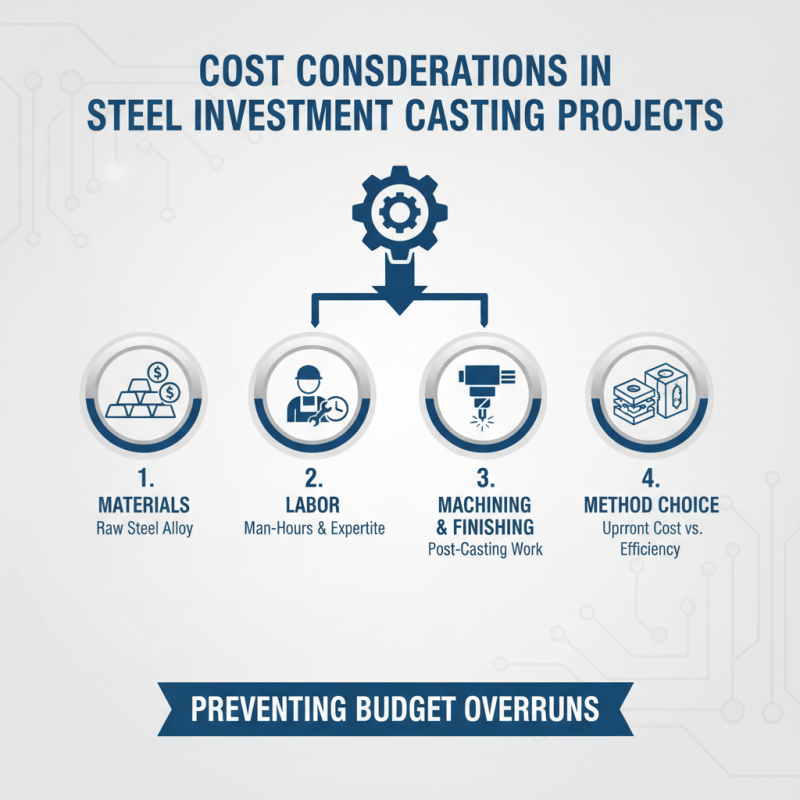
When planning a steel investment casting project, cost considerations are paramount. It's not just about the price of materials. Labor, machining, and finishing also play significant roles. Understanding these factors can prevent budget overruns. The choice of casting method impacts the overall cost, too. Some methods might be more efficient but can come with higher upfront costs.
Every project has unique needs. For instance, complex designs may require a more precise method, increasing expenses. On the other hand, simpler shapes might allow for cost-effective alternatives. Buyers should ask: Are the savings worth the potential compromises in quality? Decisions made early on can affect the final price significantly.
Additionally, overlooking minor details can lead to unexpected costs. Even small changes in design can escalate production expenses. It’s crucial to maintain clear communication with manufacturers. They can provide insights that may lead to cost reductions. Explore various options, but remain aware of long-term implications. Simple is not always better; complexity can sometimes be necessary.