Top 10 Considerations for Choosing the Best Steel Casting Foundry
In the realm of manufacturing, the choice of a Steel Casting Foundry plays a pivotal role in determining the quality and performance of cast components. According to John Smith, a noted expert in the steel casting industry, "Selecting the right foundry is crucial for ensuring that the final product meets both structural integrity and performance expectations." His insight highlights the importance of careful consideration when evaluating foundries, as each offers distinct capabilities and expertise that can significantly impact project outcomes.
When exploring the best Steel Casting Foundry, several key factors must be taken into account. These include the foundry's technological capabilities, quality control processes, and experience with specific materials. Furthermore, understanding a foundry's production capacity and turnaround times can help align project timelines with operational needs. Ultimately, choosing the right Steel Casting Foundry is not merely a logistical decision but a strategic one that influences the success of manufacturing initiatives across various industries. By taking the time to evaluate these considerations, businesses can forge partnerships that bolster efficiency and enhance product quality, leading to long-term benefits.
Understanding the Importance of Selecting the Right Steel Casting Foundry
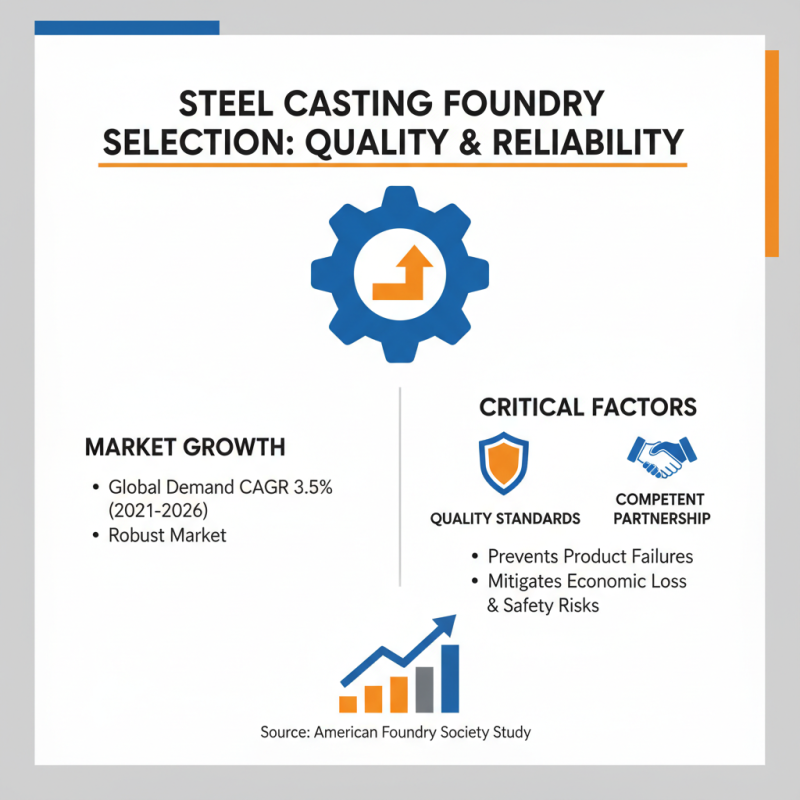
Choosing the right steel casting foundry is critical for ensuring the quality and reliability of manufactured components. According to a study conducted by the American Foundry Society, the global demand for steel casting is projected to grow at a CAGR of 3.5% from 2021 to 2026, indicating a robust market and highlighting the necessity for industries to partner with competent foundries. Selecting a foundry that adheres to stringent quality standards is essential, as quality discrepancies can lead to product failures, resulting in significant economic losses and safety hazards.
Moreover, the capabilities of the foundry in terms of technology, material expertise, and production processes play a significant role in the selection process. A report from the International Journal of Metalcasting revealed that 65% of manufacturers reported facing challenges related to material integrity and dimensional accuracy. Therefore, a foundry that employs advanced techniques such as computer-aided design and 3D printing can enhance the precision and efficiency of the casting process. Additionally, evaluating the foundry’s experience and industry reputation is vital; a foundry with a proven track record in your specific application area will likely deliver better outcomes and foster long-term collaboration, reducing the risk of costly errors in production.
Key Factors to Evaluate When Choosing a Steel Casting Foundry
When evaluating steel casting foundries, several key factors must be considered to ensure optimal outcomes for manufacturing processes. One critical element is the foundry's capacity and capabilities. A report by the American Foundry Society indicates that around 75% of successful foundries meet specified production capabilities and maintain the flexibility to accommodate custom orders. This adaptability is essential for firms that require tailored solutions for various industries, from aerospace to automotive.
Another significant consideration is the foundry's quality assurance processes. Studies highlight that around 82% of casting defects are attributed to inadequate quality control measures. Therefore, it is imperative for a foundry to employ rigorous inspection methodologies, including non-destructive testing (NDT) and adherence to ISO 9001 standards. By prioritizing foundries with comprehensive quality assurance systems, companies can mitigate risks associated with failed components and ensure the reliability of their products. Additionally, the foundry's experience and expertise in specific steel alloys can provide a competitive edge, contributing to superior performance and durability in end applications.
Assessing the Foundry's Experience and Expertise in Steel Casting
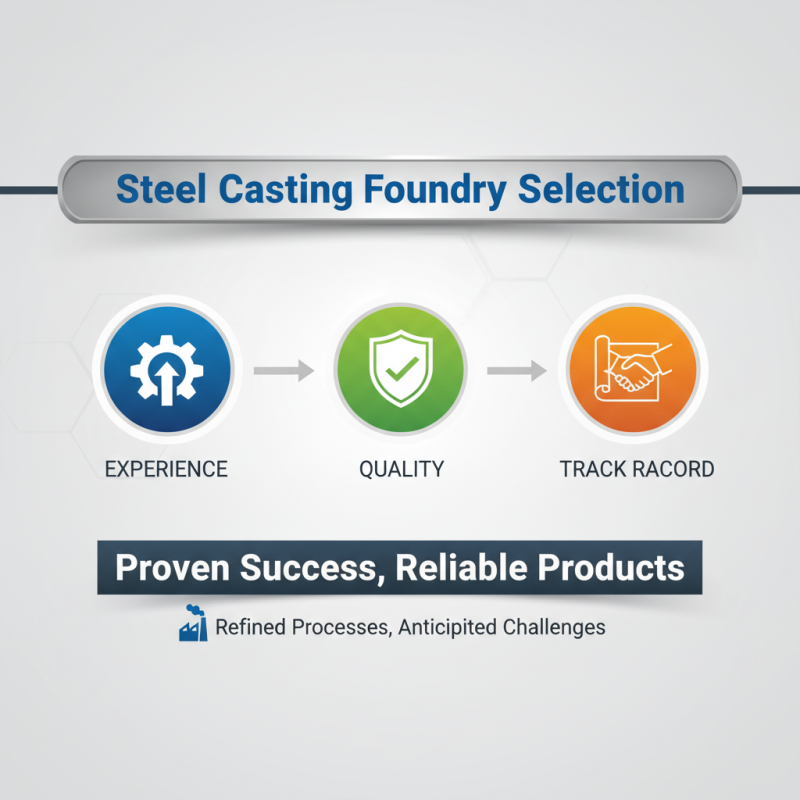
When selecting a steel casting foundry, one of the most critical aspects to consider is the foundry's experience and expertise in the industry. A foundry with a rich history in steel casting will have refined its processes over time, ensuring higher quality and more consistent products. Look for a foundry that has a proven track record in handling projects similar to yours. This experience allows them to anticipate challenges and implement effective solutions, ultimately leading to better project outcomes.
Additionally, it's essential to evaluate the qualifications and skills of the personnel working at the foundry. Experienced engineers and technicians can make a significant difference in the production process. Their expertise not only ensures adherence to quality standards but also enhances innovation in design and manufacturing techniques. A foundry that invests in continuous training and development for its staff demonstrates a commitment to excellence and can adapt to the evolving demands of the steel casting market. By prioritizing a foundry's experience and expertise, you position your project for success while minimizing the risk of costly mistakes.
Examining Quality Control Processes and Certifications of the Foundry
When selecting a steel casting foundry, the quality control processes and certifications they uphold play a critical role in ensuring the final product meets or exceeds industry standards. A foundry's commitment to quality assurance can be reflected in their adherence to recognized certifications such as ISO 9001, which denotes a robust quality management system. Additionally, certifications specific to the steel and casting industry can offer insights into the foundry's operational excellence and reliability.
Tips for assessing a foundry's quality control include visiting their facility if possible, as this can provide firsthand insight into their processes. Inquire about their quality testing procedures – understanding how they ensure the integrity and durability of their castings is essential. Furthermore, check for their commitment to continuous improvement through certifications and regular audits, as this often indicates a forward-thinking mentality dedicated to maintaining high standards.
Another key consideration is their ability to trace materials and production processes. A foundry with a rigorous traceability system can assure clients of compliance with specifications and regulations throughout the production cycle. Always ask about their approach to addressing defects when they arise, as this can highlight their problem-solving capabilities and commitment to customer satisfaction. Overall, these quality control elements are vital in determining the most suitable steel casting foundry for your needs.
Comparing Pricing, Lead Times, and Customer Support Options
When choosing a steel casting foundry, pricing, lead times, and customer support are pivotal factors that can significantly influence decision-making. According to a recent industry analysis, costs for steel casting can vary widely based on the manufacturing processes employed, with basic sand casting averaging around $3.00 to $6.00 per pound, while more intricate processes such as precision casting can climb to upwards of $10.00 or more per pound. Organizations need to carefully evaluate the intricacies of each foundry's pricing structure, which may include setup fees, tooling costs, and volume discounts, as these factors can substantially affect the overall budget.
Lead times are another critical consideration; industry reports from the American Foundry Society suggest that standard lead times for steel casting can range from 4 to 12 weeks, depending on the complexity of the design and the foundry’s existing workload. Companies must assess their project timelines and ensure that the foundry can meet their specific delivery needs. Additionally, customer support is essential in navigating the complexities of steel casting. Effective communication, technical assistance, and responsiveness can differentiate one foundry from another. Having dedicated support channels, especially in the early stages of project development, can mitigate potential challenges and streamline the manufacturing process, ultimately contributing to the success of the final product.
Top 10 Considerations for Choosing the Best Steel Casting Foundry - Comparing Pricing, Lead Times, and Customer Support Options
| Foundry Location |
Pricing ($/Ton) |
Lead Time (Weeks) |
Customer Support Rating |
Additional Services |
| USA |
2500 |
4 |
5/5 |
Design Assistance, Quality Inspection |
| China |
1500 |
6 |
4/5 |
Rapid Prototyping, After-sales Service |
| Germany |
3200 |
3 |
5/5 |
Custom Finishing, Logistics Support |
| India |
1800 |
5 |
4/5 |
Material Sourcing, Engineering |
| Mexico |
2000 |
4 |
4.5/5 |
Consultation, Supply Chain Management |