Choosing a stainless steel fabrication company is not just a search for the lowest quote. Buyers need a partner who can meet the required specifications, communicate clearly, and deliver consistent work. This guide to 2026’s top companies offers a starting point for comparing capabilities, rather than a guarantee that any one supplier will suit every project. Needs vary.
Stainless Steel Fabrication can involve laser cutting, forming, welding, machining, and finishing. The right mix depends on the part, its environment, and the required tolerance. A polished food-processing vessel, for example, calls for different surface and cleaning considerations than a structural bracket. Details matter. Buyers should ask about material grades, inspection procedures, sample parts, production capacity, and delivery schedules. Requesting relevant project references can also help distinguish proven experience from broad marketing claims. Claims need checking.
Company rankings can simplify research, but they may not capture current lead times, regional service, or the demands of a specific design. Treat them as a shortlist, then confirm details directly with each supplier. Compare like with like: clarify what each quote includes, such as finishing, packaging, and quality documentation. One overlooked question can change the real cost. This overview aims to help buyers ask sharper questions and weigh practical trade-offs. It cannot replace a technical review of drawings or a careful assessment of supplier fit. A good choice is specific.
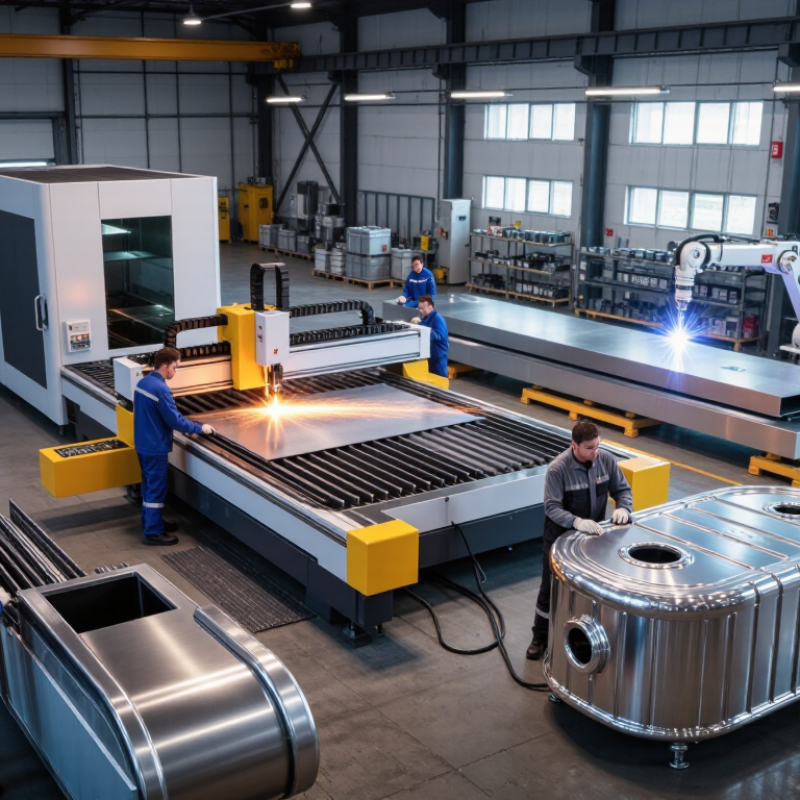
Stainless steel fabrication turns flat sheets, plates, tubes, and bars into components for equipment, buildings, and transport. The reported 2023 global output was 58.4 million tonnes. That figure describes stainless steel production, not the amount ready for buyers as finished fabricated goods. Grades, mill forms, and processing needs all affect what reaches a workshop.
Fabrication commonly involves cutting, bending, machining, welding, and surface finishing. A laser or waterjet can cut a sheet profile; a press brake then forms it to a specified angle. During welding, heat input and joint preparation matter because distortion can pull an assembly out of square. Even a small mismatch may complicate installation. That matters. Pickling or mechanical finishing can remove heat tint and refine the surface, while dimensional checks help confirm the part matches its drawing. In practice, surface appearance alone is not enough.
For buyers, useful questions include the material grade, thickness tolerance, weld inspection method, finish requirement, and traceability of material certificates. These details make quotations easier to compare. They also help reveal whether a supplier has planned for the actual service environment, including moisture, cleaning chemicals, or temperature changes. A large global output number can signal broad industrial capacity, but it does not guarantee local availability, short lead times, or consistent quality. I would not treat tonnage as a substitute for checking production records and sample parts; that distinction is easy to overlook.

Type 304 stainless steel is a common choice for fabricated parts, partly because it combines useful corrosion resistance with good formability. Its composition contains at least 18% chromium and 8% nickel. Chromium helps form a protective surface layer, while nickel supports the steel’s structure and workability. These figures are a starting point, not a complete purchasing specification.
For buyers, ask for the material test certificate and confirm the grade, thickness, and surface finish. Then consider how the part will be used. A brushed sheet for indoor equipment faces different demands from a welded tank exposed to salty spray. Type 304 handles many everyday environments, but chloride exposure can lead to pitting. That matters. In those conditions, discuss alternatives with a qualified fabricator rather than assuming 304 will last.
Fabrication quality also affects performance. Heat tint near a weld, rough edges, or embedded carbon-steel particles can undermine a clean finish. Ask how the shop controls cutting, forming, welding, and post-weld cleaning. Small details count. I would not choose a supplier on alloy claims alone; inspect sample work and verify traceability. Even then, a sample cannot fully predict service life, so define the operating environment clearly before ordering.
2026 Top Stainless Steel Fabrication Companies for Buyers
A polished sample is not enough to judge a fabricator. Ask for its current ISO 9001 certificate, then check the certification scope and expiry date. A quality system shows how work is controlled; it does not guarantee every weld or delivery will be flawless. Ask how the shop handles nonconforming parts and corrective actions. The answer should include a real process, not just reassuring words.
Tips: Request sample weld procedure and welder qualification records. Confirm they cover the process, material, and thickness your project requires. Ask how inspection results are recorded, including any specified visual or nondestructive testing.
Traceability matters when a part needs repair or replacement. Ask the fabricator to show how stainless steel heat numbers connect from mill certificates to cut components and finished assemblies. Labels, traveler sheets, and cutting records should tell a consistent story. A quick records review can reveal gaps before production begins. Still, paperwork can look tidy while shop-floor habits vary. Visit the facility if practical, and compare what you see with the documented process. Notice how material is identified after cutting. Small details count.
Choosing a stainless steel fabricator in 2026 means comparing more than quoted price. The World Stainless Association reported global stainless steel melt-shop production of 58.4 million tonnes in 2023, up 4.6% year over year. This indicates broad material supply, not a supplier’s own capacity. Ask for monthly output, current backlog, maximum sheet dimensions, and lead times by grade.
Compare services such as cutting, forming, machining, welding, finishing, and inspection. Request sample inspection records, material certificates, and documented surface-finish tolerances. Food equipment, marine systems, and chemical-processing skids each bring different corrosion and cleanliness requirements. A polished showroom is not proof. Check whether the fabricator can manage these requirements consistently across the full order.
For global reach, compare export packaging, port access, communication across time zones, and freight support. Confirm how drawing revisions, delivery updates, and damage claims are handled. A pilot order using a real drawing can reveal gaps before larger volumes are committed. Published capacity figures rarely show shift utilization or subcontracted work, so treat them as a starting point, not a guarantee.
Buyer comparison framework. No company-specific capacity, certification, or geographic claims are included; request current, verifiable details from each supplier before making a shortlist.
| Comparison dimension | What to compare | Evidence to request | Buyer considerations |
|---|---|---|---|
| Fabrication services | Cutting, forming, machining, welding, assembly, and surface finishing; confirm which operations are performed in-house. | Process list, equipment details, sample parts, and a clear list of subcontracted operations. | Match the supplier’s actual processes to the drawing, tolerances, finish, and delivery scope. |
| Material capability | Supported stainless grades, product forms, thicknesses, and material traceability procedures. | Material specifications, sample mill certificates, traceability records, and documented grade-segregation practices. | Grade selection depends on the service environment and design requirements. For example, 316 stainless steel contains molybdenum and is commonly selected for improved resistance to chloride-related corrosion compared with 304 in many applications. |
| Production capacity | Available machine envelope, maximum workable dimensions and thicknesses, shift pattern, throughput, and current lead time. | Machine list with working limits, recent delivery performance, and a capacity plan for the buyer’s expected order profile. | Compare capacity against the actual part geometry, batch size, production schedule, and expected demand variation. |
| Welding and quality control | Applicable welding processes, welder qualifications, inspection methods, and control of distortion and weld appearance. | Welding procedure documents, personnel qualification records, inspection plans, and representative inspection reports. | Specify required codes, acceptance criteria, documentation, and inspection level in the purchase documents. |
| Industries served | Relevant experience in sectors such as food processing, chemical processing, water treatment, construction, energy, or transportation. | Comparable project examples, product references where permitted, and evidence of meeting sector-specific requirements. | Past experience is useful, but verify that the supplier can meet the standards and operating conditions of the specific project. |
| Finishing and cleanliness | Available surface finishes, deburring, pickling or passivation options, and controls to prevent surface contamination. | Finish specifications, process records where required, and approved samples or reference panels. | Define the required finish and cleanliness criteria; visual terms alone may not provide enough detail for consistent acceptance. |
| Certifications and compliance | Management-system certifications, product-specific approvals, and compliance documents relevant to the order and destination market. | Current certificates, their scope and expiry dates, and confirmation that the required facility and processes are covered. | Do not assume a certification is held or applies to every product; verify it directly with the issuing body when necessary. |
| Global reach and logistics | Export experience, destination coverage, packaging, shipping terms, customs documentation, and after-delivery support. | Recent export references, sample shipping documents, packaging specifications, and a written delivery plan for the destination. | Confirm responsibility for freight, insurance, duties, delivery timing, and damage or nonconformance handling. |
| Commercial fit | Minimum order quantities, prototype support, pricing structure, payment terms, and ability to support repeat orders. | Itemized quotation, assumptions and exclusions, sample or first-article plan, and quoted lead time. | Compare total landed cost, quality risk, lead time, and service scope—not unit price alone. |
A capable stainless steel fabrication supplier should give a lead-time estimate tied to the actual job, not a vague promise. Ask how long material sourcing, cutting, welding, finishing, and inspection will take. A schedule showing these stages is easier to assess. Check whether the quoted date depends on drawing approval or incoming material. One overlooked revision can shift delivery by days. Ask how the supplier reports delays, and request written updates at agreed milestones. Shorter lead times are useful, but only when they leave room for careful work.
Quality controls should match the part’s use and specifications. Request inspection records, material certificates where relevant, and clear acceptance criteria for welds, dimensions, and surface finish. Ask how nonconforming parts are handled. Details matter. Compare costs line by line: tooling, finishing, packaging, shipping, and possible rework can change the apparent bargain. After-sales support also deserves a practical test. Who answers a defect report, what evidence is needed, and how quickly can replacement work be reviewed? It is tempting to choose the lowest quote or fastest date. That can be a poor trade-off, and even a detailed checklist cannot eliminate every production surprise.