Top 10 CNC Machining Parts Manufacturers in China?
Choosing among China’s CNC manufacturers is not just a price comparison. A supplier may excel at aluminum prototypes yet lack the capacity or inspection process your production run requires. The right choice depends on the part, material, tolerances, order volume, and delivery needs.
Quality expert Joseph M. Juran is often credited with this reminder: “Without a standard, there is no logical basis for making a decision or taking action.” It applies to supplier research, too. Compare manufacturers using consistent criteria: machining capabilities, material options, quality documentation, communication, and production capacity. Ask how they verify critical dimensions, and request sample inspection records where appropriate. Small details matter.
This guide to the Top 10 CNC Machining Parts Manufacturers in China offers a starting point, not a universal ranking. A polished brochure can still leave important questions unanswered. Check each company’s current services and discuss your drawings, tolerances, finishes, and expected volumes directly. If a supplier’s capabilities are unclear, ask for clarification before treating a listing as a fit. The goal is to find a dependable match for your Cnc Machining Parts—not simply the lowest quote. One caveat: supplier information can change, so confirm details before making a decision.
Understanding CNC Machining Parts and Their Applications
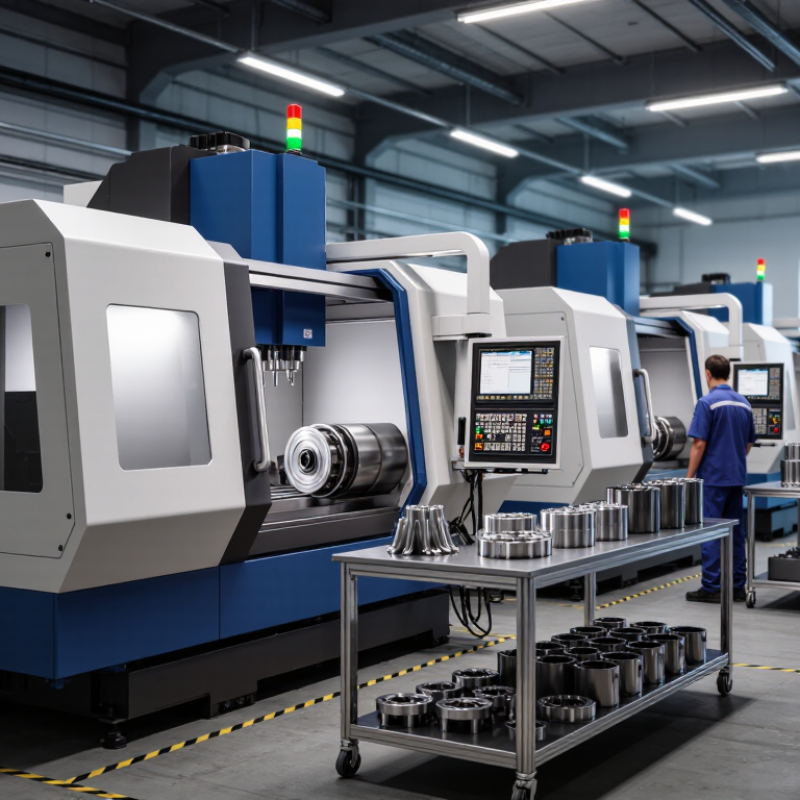
CNC-machined parts are components shaped by computer-controlled cutting tools. A mill can create flat faces, slots, and precise pockets, while a lathe turns round features such as shafts and bushings. The process works with metals and plastics, including aluminum, stainless steel, brass, and engineering-grade polymers. Small details matter. A narrow groove or misplaced hole can affect how an assembly fits.
These parts appear in pump housings, robotic joints, camera mounts, and electronic enclosures. A pump housing may need smooth sealing surfaces to prevent leaks. A robotic joint often combines a machined shaft with accurately positioned bolt holes. For a small enclosure, CNC machining can produce prototypes quickly, especially when a design changes between test rounds. It is not always the cheapest choice for very large quantities.
Choosing a machining supplier involves more than comparing prices. Engineers should review material specifications, tolerances, surface finish, and inspection methods. A drawing can look complete and still omit a useful detail, such as an edge break or a critical datum. That oversight can lead to extra questions or rework. Ask how dimensions are checked, and consider whether every tight tolerance is truly needed. The answer may change the part’s cost and production time.
Key Criteria for Evaluating CNC Machining Manufacturers in China
Top 10 CNC Machining Parts Manufacturers in China?
Key Criteria for Evaluating CNC Machining Manufacturers in China
A useful shortlist starts with evidence, not a polished website. Ask for recent inspection reports, material certificates, and sample-part measurements. Check whether the supplier can hold your specified tolerances across repeat orders, not just one approved sample. A bright, burr-free edge is reassuring, but it cannot replace documented dimensional checks. Also review machine capacity, maintenance records, production planning, and how quickly the team flags a problem.
The International Federation of Robotics reported that China installed 276,288 industrial robots in 2023, representing 51% of global installations. This signals a large automation base, but robot numbers alone do not prove machining quality. Request details about the actual equipment used for your parts, measuring tools, and inspection frequency. A short technical call can reveal whether engineers understand datum selection, surface finish, and realistic tolerances. Communication matters.
Tips: Send a clear drawing and ask for a first-article inspection report before approving production. Compare quoted lead times with stated capacity, and ask what happens when a tool wears or a dimension drifts. One detail is often overlooked: a supplier may meet the drawing yet still deliver parts that are difficult to assemble. Check fit with a real mating component when possible.
Profiles of 10 CNC Machining Parts Manufacturers in China
These are representative profiles, not a verified ranking of named firms. Profile 1: A precision-turning workshop serves small shafts and threaded fittings, with careful attention to concentricity. Profile 2: A milling-focused supplier makes aluminum housings and brackets, often using multi-axis equipment for complex faces. Profile 3: A mold-component specialist produces inserts, cores, and plates; close tolerances matter here. Profile 4: A stainless-steel shop handles corrosion-resistant parts and should document material grades clearly. Profile 5: A prototype manufacturer supports short runs, where quick design feedback can save time. Some details vary by shop.
Profile 6: A large-part machinist works on frames and machine bases, so floor space and lifting capacity are worth checking. Profile 7: A medical-device supplier may offer fine finishing and traceable inspection records; verify requirements directly. Profile 8: An electronics-focused shop makes heat sinks and enclosures, with burr control affecting assembly. Profile 9: A gear-and-transmission supplier cuts hubs and precision features, where measurement reports help assess consistency. Profile 10: A full-service manufacturer combines machining, finishing, and assembly, reducing handoffs but not automatically reducing risk. A practical fit. Ask for sample inspection data, material certificates, and realistic lead times. Still, a polished brochure proves little; confirm equipment, process controls, and communication with the people doing the work.
Comparing Manufacturer Capabilities, Certifications, and Industries
When comparing China’s CNC machining manufacturers, look beyond machine counts. A supplier with five-axis mills, turning centers, and in-house inspection may suit complex aerospace parts; another may handle repeat automotive orders more efficiently. Check tolerances, material experience, batch size, lead time, and whether inspection reports include actual measurements. Certifications matter, but verify their scope and issuing facility. ISO 9001 indicates a quality-management system; IATF 16949, AS9100, and ISO 13485 address specific industry needs. A certificate alone does not prove every part will be right.
Capability is increasingly tied to data. Deloitte’s 2024 Smart Manufacturing Survey found that 86% of surveyed manufacturing leaders expect smart manufacturing to drive competitiveness within five years. For buyers, that makes digital production records, calibrated gauges, and traceable material certificates useful comparison points—not just sales claims. Ask for a sample inspection report and a clear explanation of how rejected parts are handled. Small detail. Often revealing.
Tip: Compare at least three suppliers using the same drawing and request a quotation with tolerances, surface finish, certification scope, and delivery assumptions stated. Visit or request a live video walkthrough of the workshop when feasible. A polished website can hide gaps; even a strong supplier may need clarification on a difficult feature. Don’t treat the first quote as the whole story.
How to Choose a Manufacturer for Your Project
How to Choose a Manufacturer for Your Project
Choose a CNC machining manufacturer by matching its capabilities to your part, not by comparing prices alone. Send the same drawing, material specification, quantity, and tolerance requirements to each candidate. Ask how they will machine critical features, control tolerances, and inspect finished parts. A clear explanation matters. For a tight-fit aluminum bracket, for example, ask how the shop checks hole position and edge burrs. A polished quote is not proof of process control.
Capacity and skilled staff also affect delivery. A 2024 workforce study by Deloitte and The Manufacturing Institute estimated that U.S. manufacturing could need 3.8 million workers between 2024 and 2033, with 1.9 million roles potentially unfilled. This is not a scorecard for any individual shop, but it highlights why staffing and technical continuity deserve attention. Request a sample inspection report, material traceability documents, and a realistic production schedule. Then verify the details against your own requirements.
Tips: Start with a sample order when practical. Check dimensions, threads, surface finish, and packaging. Ask whether setup, inspection, and finishing are included in the quote. The cheapest offer can become costly when assumptions differ.
How to Choose a CNC Machining Manufacturer
Material density affects part weight and may influence material selection. Use this comparison as a starting point, then confirm material grade, tolerances, and finishing requirements with your manufacturer.