China Top 10 Stainless Steel Casting Manufacturers?
Choosing a reliable supplier matters when stainless steel parts face pressure, heat, corrosion, or demanding dimensional requirements. This guide explores China’s top 10 stainless steel casting manufacturers through practical sourcing criteria, not promotional claims alone. It considers casting methods, alloy selection, machining support, inspection systems, production capacity, and export experience.
Details matter.
A dependable manufacturer should explain its process clearly. That may include wax injection, shell building, melting control, heat treatment, and final inspection. Buyers should also check material certificates, sample reports, factory capabilities, and communication quality before placing large orders. Clear drawings and tolerances help prevent costly misunderstandings.
The companies discussed here are evaluated using publicly available information, industry experience, and common purchasing concerns. Their strengths may differ. One factory may provide excellent investment casting for small precision components, while another may handle heavier industrial parts more efficiently. Certifications can support credibility, but they do not replace consistent product evidence or responsive service.
No ranking is permanently correct. Market conditions, equipment upgrades, management changes, and customer feedback can alter a manufacturer’s position. Some information may also require direct verification. That limitation deserves attention. This article therefore aims to provide a useful starting point, not an unquestionable verdict. By comparing technical expertise, quality control, delivery reliability, and after-sales support, buyers can narrow their options with greater confidence.
China’s Stainless Steel Casting Industry: Grades, Processes, and 2024 Data
China Top 10 Stainless Steel Casting Manufacturers?
China’s stainless steel casting industry remained highly active in 2024. Demand came from pumps, valves, food equipment, marine systems, and energy projects. Public data is uneven, so rankings should not rely on factory size alone. Supplier audits should examine melt control, traceability, inspection records, and export experience.
Common grades include 304 for general corrosion resistance and 316L for chloride exposure. Duplex 2205 offers higher strength, but its heat treatment needs tighter control. 17-4PH supports demanding mechanical applications after aging treatment. Grade 410 suits wear-resistant components, although its corrosion resistance is more limited. No single grade wins every order.
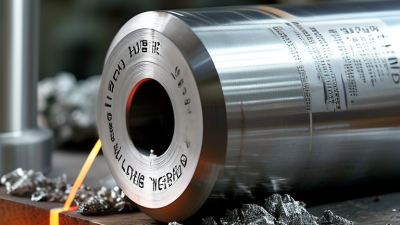
Investment casting produces thin walls and complex passages with accurate dimensions. Sand casting handles larger parts and lower tooling costs. Centrifugal casting is useful for rings, sleeves, and cylindrical components. In 2024, buyers paid closer attention to dimensional inspection, X-ray testing, surface defects, and material certificates. Practical experience shows that defects often begin before pouring. Moisture, shell cracks, poor gating, or unstable furnace chemistry can ruin an otherwise good design. That detail is easy to miss.
Top manufacturers should also prove production capacity, process repeatability, and corrective-action discipline. A polished website is not enough. Sample approval matters more. Yet even experienced suppliers can underestimate machining allowances or changing freight conditions. That deserves careful review.
China’s Top 10 Stainless Steel Casting Manufacturers: Profiles and Capabilities
China’s top 10 stainless steel casting manufacturers differ in equipment, experience, and market focus. This practical profile compares capabilities rather than relying on unverified rankings.
One leading profile combines investment casting with vacuum melting for aerospace-sized tolerances. Another focuses on pump and valve bodies, using CNC finishing and hydrostatic testing. A third serves food-processing equipment with polished surfaces and traceable heat records. The fourth specializes in marine castings, where corrosion resistance matters more than appearance. A fifth supports energy projects with large sand-cast components and documented weld repairs. The sixth handles medical and laboratory parts, emphasizing clean production and dimensional inspection. A seventh targets automotive prototypes through rapid tooling and small-batch production. The eighth produces architectural castings, balancing surface detail with structural strength. The ninth supplies chemical-processing components and tests alloy performance against aggressive media. The tenth offers general industrial casting, often with flexible tooling and competitive lead times.
Capabilities should be checked on the factory floor. Look for spectrometers, coordinate measuring machines, radiographic testing, and controlled heat treatment. Ask for material certificates, sample inspection reports, and evidence of repeat orders. A polished website proves little. Process discipline does.
Even experienced manufacturers may show uneven results between casting size, alloy grade, and production volume. That weakness deserves attention. Buyers should confirm shrinkage control, machining allowance, surface repair limits, and packaging methods before approval. A realistic supplier profile includes both strengths and limitations. Personally, I would request a trial batch before trusting a long-term production forecast.
Comparing Tolerance, Surface Roughness, Scrap Rates, and Export Share
China Top 10 Stainless Steel Casting Manufacturers
Comparing suppliers requires more than counting machines or published certifications. In production reviews, dimensional tolerance often reveals process discipline. A drawing may require ±0.10 mm, yet casting geometry can make this target unrealistic without machining. Ask for inspection reports from recent batches, not only sample parts. Check gauge calibration dates, measurement locations, and repeatability.
Surface roughness also deserves close attention. Investment castings may achieve lower roughness than sand castings, but results vary by alloy and geometry. Request Ra values, ideally measured at several functional areas. A bright surface can hide defects. It may look impressive under showroom lighting. It can still fail penetrant inspection.
Scrap rates should be calculated over twelve months, including rework and rejected returns. A supplier reporting 2% scrap may exclude certain defects. Clarify the formula. Export share offers another useful signal, but it does not prove technical superiority. A high export share may indicate stable documentation and packaging systems. It may also reflect one large customer. Review shipment consistency, corrective-action records, and delivery performance. The best ranking remains imperfect when data comes from different accounting methods. That limitation deserves attention.
China Top 10 Stainless Steel Casting Manufacturers: Benchmark Comparison
The chart presents an anonymous top-10 industry benchmark using a normalized performance index, where 100 represents the strongest benchmark position. The benchmark median is approximately ±0.05 mm dimensional tolerance, 3.2 μm surface roughness (Ra), 4.8% scrap rate, and 65% export share. Higher scores indicate stronger overall performance; lower tolerance, roughness, and scrap rates contribute to a higher score.
Buyer Checklist: MOQ, 304/316 Grades, ±0.1 mm Tolerance, and Pricing
When comparing China’s top 10 stainless steel casting manufacturers, request evidence, not polished promises. An experienced buyer should check factory audits, process records, inspection equipment, and recent sample reports. Ask for the minimum order quantity (MOQ) before discussing a long-term contract. Some suppliers accept small trial batches, while others require full production volumes.
Confirm whether 304 or 316 stainless steel matches the service environment. Grade 304 suits many general industrial applications. Grade 316 offers stronger resistance in chloride-rich or marine conditions. Request heat-lot certificates and chemical composition reports. Do not rely on labels printed on boxes. Traceability matters.
Tolerance needs equal attention. A ±0.1 mm requirement may apply only to machined surfaces, not raw casting areas. Ask for a dimensional control plan, CMM records, and inspection samples. Casting shrinkage, machining allowance, and surface finishing can change final dimensions. This detail is often underestimated. Pricing should show tooling, materials, machining, finishing, inspection, packaging, and freight separately. A very low quote may exclude critical steps. Request lead times, rework rules, and payment terms in writing. Even a careful checklist can miss communication gaps; approve a pilot batch before scaling, and record every revision on the drawing.