What Is Stainless Steel Casting and How Does It Work?
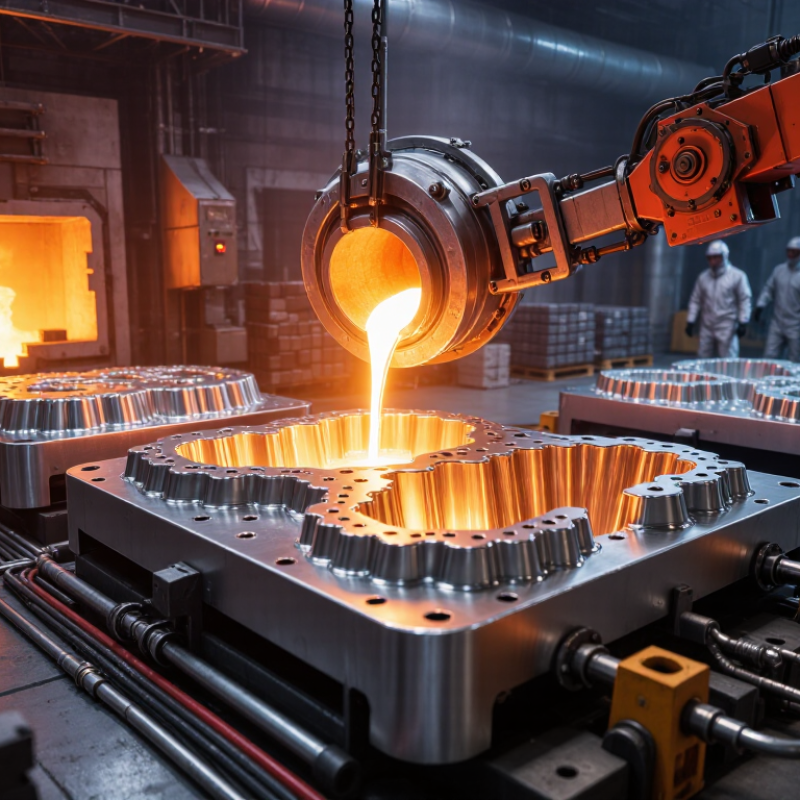
Stainless Steel Casting transforms molten stainless alloy into useful components with complex shapes, durable surfaces, and dependable mechanical performance. It begins with a pattern, mold, and carefully selected alloy. Foundries melt the metal inside a furnace, often above 1,400°C, then pour it into a prepared cavity. As the liquid cools, it follows the mold’s contours, including ribs, flanges, internal passages, and sharp transitions.
Metallurgist J.R. Davis describes stainless steel as “an iron-based alloy containing a minimum of about 10.5% chromium.” That chromium forms a thin passive oxide layer, helping the finished part resist corrosion. Nickel, molybdenum, and other elements can improve toughness, acid resistance, or high-temperature stability. The exact chemistry matters. A small imbalance may affect weldability, strength, or surface quality.
The process is controlled, but never perfectly simple. Engineers must consider shrinkage, gas porosity, hot tearing, and uneven cooling. Even a polished valve body can hide internal defects without proper inspection. Pattern design, pouring temperature, mold permeability, and heat treatment all influence the final result. Quality teams may use radiographic testing, dye penetrant inspection, dimensional checks, and chemical analysis.
Experienced foundries do more than fill molds. They study previous batches, adjust gating systems, and record furnace conditions. Still, improvement remains necessary. A casting that performs well in one environment may fail in another. This article explains how Stainless Steel Casting works, where its strengths appear, and why careful process decisions determine reliable performance.
Define Stainless Steel Casting: ≥10.5% Chromium and Cast Alloy Grades
What Is Stainless Steel Casting and How Does It Work?
Stainless steel casting begins with a clear chemical definition. Stainless steel contains at least 10.5% chromium by mass, according to ISO 15510. Chromium forms a thin, self-repairing oxide film on the surface. This film helps resist rust and chemical attack.
The term “cast alloy grade” describes the chemistry and performance selected for a component. Common families include austenitic, martensitic, ferritic, and duplex grades. For example, CF8M offers strong corrosion resistance, while CA6NM supports higher strength and hardness. ASTM A743/A743M covers many corrosion-resistant chromium and chromium-nickel castings. The choice depends on temperature, chloride exposure, pressure, and wear. A pump body may need different chemistry from a furnace fixture.
The process starts by melting alloy charges in an electric furnace. Technicians control chromium, nickel, carbon, and molybdenum levels before pouring. Liquid metal enters a sand, ceramic, or metal mold. After solidification, workers remove gates, clean surfaces, and inspect dimensions. Heat treatment can refine the structure and improve mechanical performance. The International Stainless Steel Forum reported approximately 58.4 million tonnes of stainless steel production in 2023. That scale shows the material’s importance, but it does not guarantee every casting will perform well. Small chemistry errors can cause porosity, cracking, or weak corrosion resistance. Testing still matters. Industry practice commonly combines chemical analysis, visual inspection, radiography, and mechanical testing before service. According to the 2024 USGS Mineral Commodity Summaries, chromium remains a strategically important alloying material, reminding engineers that grade selection also depends on supply and processing realities.
What Is Stainless Steel Casting and How Does It Work?
Stainless steel casting produces near-net-shape components by pouring molten stainless steel into a mold, allowing it to solidify, and then removing and finishing the casting. Stainless steel is generally defined as an iron-based alloy containing at least 10.5% chromium.
The chart shows the midpoint of the specified chromium range for selected ASTM cast alloy grades. CA6NM is a martensitic cast stainless steel, while CF3, CF8, CF3M, and CF8M are austenitic cast stainless steel grades. The 10.5% line represents the commonly used minimum chromium threshold for stainless steel.
Reference basis: chromium ranges from ASTM cast alloy specifications, including ASTM A743 and ASTM A351; plotted values are calculated midpoints of those specified ranges.
Prepare and Melt the Charge at Approximately 1,370–1,530°C
Stainless steel casting begins with a carefully measured charge. Technicians select returns, virgin metal, and alloy additions according to the required grade. Each piece should be dry, clean, and free from oil, paint, or sealed cavities. Moisture is dangerous. Even a small amount can create violent steam near molten metal. Material certificates and visual checks improve traceability before furnace loading.
The prepared charge enters a suitable furnace and heats gradually. Operators monitor the bath instead of trusting color alone. Stainless steel commonly melts around 1,370–1,530°C, depending on grade and process. That range is practical, not universal. Carbon control, oxidation, furnace atmosphere, and pouring temperature influence the actual setting. Optical emission testing can verify chemistry before release. Small corrections may require carefully weighed additions, yet excessive adjustment can create another problem.
When the metal becomes fully liquid, workers remove slag and check for unmelted pieces. Ladles, tools, and molds must be dry and properly preheated. Clean handling matters because oxides can become inclusions inside the casting. Experienced teams sample the melt and record furnace readings before pouring. Temperature readings can mislead when probes drift or the bath remains uneven. A bright surface may still hide chemistry that is slightly off. That possibility deserves another test.
Control Solidification and Apply Heat Treatment to ASTM A351 Grades
Stainless steel casting begins when molten alloy fills a shaped mold and cools into a pressure-containing component. For ASTM A351 grades, solidification control is central to quality. Engineers adjust pouring temperature, mold temperature, riser size, and cooling paths. These controls guide metal flow and reduce shrinkage cavities, hot tears, and trapped gas. CF8, CF8M, and CF3M can respond differently because their alloy chemistry changes fluidity and ferrite formation. Small process changes matter.
Heat treatment then refines the cast structure. Austenitic grades commonly receive solution annealing, often near 1,040°C, followed by rapid cooling. The exact temperature, holding time, and cooling method must follow the applicable specification and section thickness. This treatment dissolves unwanted precipitates and improves corrosion resistance. It also reduces residual stress from uneven cooling. A thick valve body may cool much slower than a thin flange.
The International Stainless Steel Forum reported 58.4 million tonnes of stainless crude steel production in 2023, showing the scale of this demanding material sector. Yet production volume does not guarantee casting reliability. A perfect thermal model is rarely perfect. Actual results depend on furnace calibration, melt cleanliness, mold permeability, and operator experience. ASTM A351 acceptance testing should therefore include visual inspection, dimensional checks, and suitable nondestructive examination. One practical warning remains: aggressive cooling can prevent shrinkage, but it may increase distortion or cracking. Trade-offs require measurement, not guesswork.