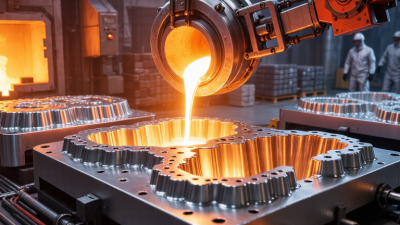
Choosing a supplier for Stainless Steel Casting requires more than comparing unit prices. Buyers should examine alloy control, pattern accuracy, inspection methods, and delivery records. A polished sample is useful, but it cannot reveal every production risk.
John Campbell, a widely recognized casting authority, has written extensively about casting quality and process design. Rather than assign him an unverified quotation, this guide applies a practical principle: supplier claims should be checked against documented process controls and measurable results. That matters when a casting must fit a machined assembly, resist a corrosive environment, or meet a demanding surface specification.
Look for clear material certificates, traceable heat numbers, and inspection reports tied to the actual order. Ask how the foundry manages shrinkage, porosity, and dimensional variation. Request evidence from comparable parts, not only a broad capability list. Details count.
The 2026 supplier comparison should also consider communication, tooling ownership, sample approval, and corrective-action practices. A low quotation may exclude testing or finishing. Confirm the scope in writing. Even experienced buyers can miss a small assumption.
No supplier is ideal for every component. The strongest shortlist will match technical needs, production volume, and risk tolerance. This guide helps buyers compare those factors carefully, while recognizing that supplier data and capabilities should be independently verified before a sourcing decision.

Stainless steel is defined by chemistry, not by a shiny surface. EN 10088-1 specifies at least 10.5% chromium by mass and no more than 1.2% carbon. That chromium forms a thin, self-repairing oxide film when exposed to oxygen. A cut edge or scratched fitting can therefore resist rust, provided the environment allows the film to reform. The threshold matters. Below it, a casting may look similar but does not meet the standard definition of stainless steel.
For buyers, a material certificate should confirm the actual chromium content, not merely state “stainless.” The International Stainless Steel Forum’s Stainless Steel in Figures 2024 reports global crude stainless-steel production of about 62.6 million tonnes in 2023. That scale makes clear why grade verification matters: the label covers many compositions and performance levels. Salt spray, acids, heat, and stagnant water can still damage stainless castings. Chromium is not magic. I would also check the specified grade, carbon level, and test records against the service conditions; a tidy certificate alone may not reveal how a complex casting performs in use.
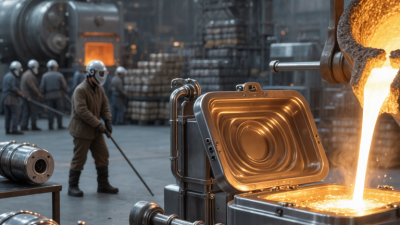
Stainless steel is generally defined as iron-based alloy containing at least 10.5% chromium by mass. The bars show the lower end of commonly specified chromium ranges: Type 410 (11.5–13.5%), Type 430 (16–18%), Type 316 (16–18%), and Type 304 (18–20%). Actual requirements depend on the applicable material specification.
For buyers comparing stainless steel casting suppliers in 2026, ASTM A351 and ASTM A743 help identify whether a casting grade suits its intended service. ASTM A351 generally covers austenitic steel castings for pressure-containing parts, while ASTM A743 addresses corrosion-resistant iron-chromium and iron-chromium-nickel alloy castings. The exact grade matters. A pump casing exposed to chlorides may need different corrosion performance than a valve body handling mild process water.
Ask suppliers to state the applicable specification, grade, heat treatment, and inspection requirements on the quotation and material records. A certificate alone is not the whole story. Check that casting identification matches the heat number, and confirm whether testing includes chemical analysis, mechanical properties, or nondestructive examination where the design requires it. Details can vary by order and specification edition, so verify requirements against the current standard and project documents.
ISO 9001 indicates that a supplier operates a quality management system; it does not certify every casting as defect-free or automatically prove compliance with ASTM requirements. Request the certificate’s scope and validity, then ask how nonconforming castings are traced and resolved. A practical supplier should explain these steps clearly. If answers feel vague, pause. I would also compare a sample inspection report with the purchase specification before placing a large order.
For buyers comparing stainless steel casting suppliers in 2026, CF8M tensile strength is a useful starting point, not a complete quality verdict. ASTM A351/A351M specifies a minimum tensile strength of 485 MPa (70 ksi) for CF8M castings. The standard also lists a minimum yield strength of 205 MPa and 30% elongation for the specified tensile-test conditions. Ask suppliers to identify the standard edition, test location, and heat number on their reports. A number without traceability is hard to trust.
Compare test certificates against the purchase specification, then check whether the casting’s geometry and sampling method match the test specimen. Review material chemistry, heat-treatment records, and non-destructive examination results where required. ASTM requirements are a technical benchmark, but they do not prove that every finished casting meets your application’s needs. I would also ask how the supplier handles results below the limit. That conversation can reveal more than a polished brochure.
Tips
Request a heat-specific tensile test report, not a generic datasheet. Confirm that 485 MPa is the required minimum for your ordered grade and standard edition. If the part is pressure-bearing or heavily loaded, have a qualified engineer review the full specification. Strength matters. So does consistency.
A reliable stainless steel casting supplier can show how each inspection result connects to a specific heat, mold, and finished part. Ask for material certificates, heat numbers, and inspection records that match the shipment. Check that reports identify the part, test method, acceptance criteria, date, and responsible inspector. Generic certificates are weak evidence.
Non-destructive testing should fit the casting’s risks. Dye penetrant testing can reveal surface-breaking flaws, while radiography may help assess internal porosity in critical sections. Neither method proves everything. Review the procedure, coverage, equipment calibration, and written results. If a report says only “passed,” ask what was examined and against which criteria.
Tips: Select a sample casting and trace it backward from its tag to the melt and inspection records. Compare dimensions against the drawing, and look for clear measurement points. Keep one question open: were the tests performed on the actual production lot, or only on a sample? A small gap in traceability deserves follow-up, even when the paperwork looks tidy.
For a stainless steel casting supplier, begin with the part, not the price. Thin walls, internal passages, and tight tolerances may favor investment casting; larger, simpler shapes may suit sand casting. Ask for process-specific evidence: sample inspection reports, defect records, and examples of comparable parts. The World Stainless Association reported global stainless steel melt shop production of 58.4 million tonnes in 2023, up 4.6% from 2022. That scale signals a broad materials market, but it does not prove a supplier can meet your specification. Check the proposed grade, chemistry controls, and traceability.
Capacity must match your actual order pattern. Request monthly output, current backlog, tooling availability, and the time needed for samples, production, and shipping. Then test the schedule against your own forecast. A quoted lead time may exclude approval loops or rework. Details matter. Compare total cost, including patterns or tooling, machining, inspection, packaging, freight, and likely scrap—not just the casting price. Ask how each charge is calculated. A pilot order can expose fit or finish problems before volume production, though one successful batch is not a guarantee. I would also review how the supplier handles deviations; that question is easy to overlook.
| Selection Dimension | What to Compare | Practical Buyer Checks | Why It Matters |
|---|---|---|---|
| Casting process fit | Investment casting, sand casting, or another process recommended for the part’s geometry, size, surface requirements, and order volume. | Ask for a process rationale tied to your drawing. Investment casting is commonly considered for intricate shapes and finer detail; sand casting is often considered for larger or less detail-sensitive parts. Confirm achievable results with sample parts. | A process that suits the part can reduce machining, scrap, and unnecessary tooling expense. |
| Part size and capacity | Maximum and minimum casting dimensions and weights, furnace capacity, molding capability, and available machining envelope. | Request the supplier’s documented limits and examples of comparable parts. Confirm capacity for your specific alloy, geometry, and production schedule—not just general facility capacity. | A casting may fit the foundry’s equipment but exceed its practical limits for quality or repeatability. |
| Stainless steel grades | Ability to melt and control the grade specified on the drawing, such as common austenitic or martensitic stainless steel casting grades. | Check the applicable material specification, grade designation, heat-treatment requirements, and whether chemical analysis and mechanical test reports are available for each heat or lot. | Similar grade names are not automatically interchangeable; application, specification, and certification requirements must align. |
| Dimensional and surface requirements | Critical dimensions, tolerances, surface finish, machining allowance, and inspection method. | Mark critical-to-function features on the drawing. Ask how dimensions are measured and request sample inspection reports. Agree in writing on acceptance criteria before production. | Clear requirements help prevent disputes and avoid paying for tighter tolerances where they are not needed. |
| Quality system and traceability | Documented quality controls, material traceability, nonconformance handling, and inspection records. | Review current quality certificates where required, sample material and dimensional reports, heat or lot identification practices, and corrective-action procedures. Verify certificates with the issuing body when relevant. | Traceability and consistent controls are important for regulated, pressure-containing, safety-critical, or repeat-order parts. |
| Tooling and sample lead time | Time for tooling design, tooling manufacture, first articles, inspection, and approval. | Request a milestone schedule that separates tooling, first-off casting, machining, testing, and customer approval. Treat quoted timing as supplier-specific and confirm it in writing. | Tooling and approval are often distinct from routine production and can determine the true launch date. |
| Production lead time | Quoted time from approved order and released drawings to shipment, including machining, testing, and packing. | Ask for the basis of the lead-time estimate, current order loading, batch size, and shipment terms. Confirm whether the quote includes inspection and any required third-party testing. | Lead times vary with alloy, order quantity, tooling status, process route, and supplier workload; a single generic market figure is not reliable. |
| Total landed cost | Piece price plus tooling, machining, finishing, inspection, packaging, freight, duties, and expected quality-related costs. | Compare quotations on the same drawing revision, quantity, Incoterm, inspection plan, and packaging basis. Ask which costs are one-time, recurring, or conditional. | The lowest casting price may not be the lowest total cost if it requires extra machining, inspection, rework, or expedited freight. |
| Capacity and supply continuity | Available production slots, backup equipment, staffing, subcontracted operations, and ability to support repeat orders. | Ask for a capacity plan for forecast volumes and peak demand. Identify which operations are subcontracted and how changes, maintenance, or shortages are managed. | Capacity should be assessed against the buyer’s actual schedule and demand variability, not only a stated annual maximum. |
| Communication and engineering support | Responsiveness to drawing questions, design-for-manufacture feedback, change control, and issue resolution. | Use a technical review before ordering. Confirm the contact for engineering and quality issues, the drawing revision-control process, and how deviations require approval. | Early clarification can prevent avoidable tooling changes, production delays, and misunderstandings about acceptance criteria. |
Note: This is a supplier-evaluation checklist, not a ranking or a set of guaranteed industry lead times or capabilities. Confirm process limits, certifications, tolerances, schedules, and costs directly with each supplier using the current part drawing and purchase requirements.